Category: blog-news

Use for blog posts

  • 6 Steps for Preventing Falls Among Your Older Loved Ones

    6 Steps for Preventing Falls Among Your Older Loved Ones

    By National Council on Aging

    Did you know that one in four older Americans falls every year?  Falls are the leading cause of both fatal and nonfatal injuries for people aged 65+.  Falls can result in hip fractures, broken bones, and head injuries. And even falls without a major injury can cause an older adult to become fearful or depressed, making it difficult for them to stay active.

    If you have an aging parent, grandparent, or neighbor in your life, helping them reduce their risk of falling is a great way to help them stay healthy and independent as long as possible.

    The good news about falls is that most of them can be prevented.  The key is to know where to look.  Here are some common factors that can lead to a fall:

    • Balance and gait:  As we age, most of us lose some coordination, flexibility, and balance— primarily through inactivity, making it easier to fall.
    • Vision:  In the aging eye, less light reaches the retina—making contrasting edges, tripping hazards, and obstacles harder to see.
    • Medications:  Some prescriptions and over-the-counter medications can cause dizziness, dehydration or interactions with each other that can lead to a fall.
    • Environment:  Most seniors have lived in their homes for a long time and have never thought about simple modifications that might keep it safer as they age.
    • Chronic conditions:  More than 80% of older adults have at least one chronic condition like diabetes, stroke, or arthritis. Often, these increase the risk of falling because they result in lost function, inactivity, depression, pain, or multiple medications.

    6 Steps to Reducing Falls

    Here are six easy steps you can take today to help your older loved one reduce their risk of a fall:

    1. Enlist their support in taking simple steps to stay safe.

    Ask your older loved one if they’re concerned about falling. Many older adults recognize that falling is a risk, but they believe it won’t happen to them or they won’t get hurt—even if they’ve already fallen in the past.  A good place to start is by sharing NCOA’s Debunking the Myths of Older Adult Falls.  If they’re concerned about falling, dizziness, or balance, suggest that they discuss it with their health care provider who can assess their risk and suggest programs or services that could help.

    2. Discuss their current health conditions.

    Find out if your older loved one is experiencing any problems with managing their own health. Are they having trouble remembering to take their medications—or are they experiencing side effects? Is it getting more difficult for them to do things they used to do easily?

    Also make sure they’re taking advantage of all the nder Medicare preventive benefits now offered under Medicare, such as the Annual Wellness visit. Encourage them to speak openly with their health care provider about all of their concerns.

    3. Ask about their last eye checkup.

    If your older loved one wears glasses, make sure they have a current prescription and they’re using the glasses as advised by their eye doctor.  Remember that using tint-changing lenses can be hazardous when going from bright sun into darkened buildings and homes.  A simple strategy is to change glasses upon entry or stop until their lenses adjust. Bifocals also can be problematic on stairs, so it’s important to be cautious. For those already struggling with low vision, consult with a low-vision specialist for ways to make the most of their eyesight.

    4. Notice if they’re holding onto walls, furniture, or someone else when walking or if they appear to have difficulty walking or arising from a chair.

    These are all signs that it might be time to see a physical therapist. A trained physical therapist can help your older loved one improve their balance, strength, and gait through exercise. They might also suggest a cane or walker—and provide guidance on how to use these aids. Make sure to follow their advice. Poorly fit aids actually can increase the risk of falling.

    5. Talk about their medications.

    If your older loved one is having a hard time keeping track of medicines or is experiencing side effects, encourage them to discuss their concerns with their doctor and pharmacist.  Suggest that they have their medications reviewed each time they get a new prescription. Consider the benefits of creating an elaborate spreadsheet to keep track of medications and schedules.  And, add a timed medication dispenser that you can refill each month to promote  peace of mind for adherence to the prescribed regime.  Also, beware of non-prescription medications that contain sleep aids—including painkillers with “PM” in their names. These can lead to balance issues and dizziness. If your older loved one is having sleeping problems, encourage them to talk to their doctor or pharmacist about safer alternatives.

    6. Do a walk-through safety assessment of their home.

    There are many simple and inexpensive ways to make a home safer.  For professional assistance, consult an Occupational Therapist.  Here are some examples:

    • Lighting: Increase lighting throughout the house, especially at the top and bottom of stairs. Ensure that lighting is readily available when getting up in the middle of the night.
    • Stairs: Make sure there are two secure rails on all stairs.
    • Bathrooms: Install grab bars in the tub/shower and near the toilet. Make sure they’re installed where your older loved one would actually use them.  For even greater safety, consider using a shower chair and hand-held shower.

    For more ideas on how to make the home safer, the Centers for Disease Control (CDC) offers a home assessment checklist in multiple languages.
    NCOA, the Administration on Aging, and the CDC also promote a variety of community-based programs, like A Matter of Balance, Stepping On, and Tai Chi, that can help older adults learn how to reduce their risk of falling.  Contact your Area Agency on Aging to find out what’s available in your area.

    End of Article

    An alternative to making adaptations to your loved one’s home is to consider an assisted living setting.  For example, our setting at Cambrian Senior Living is completely barrier free.  The private bathrooms are already furnished with grab bars around the toilets and in the showers. The bathrooms are spacious allowing ease of moment without obstacles.  The walk in shower has no lip to step over, and is so spacious it allows room for a caregiver to assist with showering as needed.     Shower chairs are promoted as an additional precaution, although they are not required.  The building has extra wide hallways allowing pedestrians and/or wheelchairs to pass going both directions.  The hallways are furnished with hand rails and bright lighting.  In an assisted living setting you can be assured that medications are being taken as prescribed when the resident participates in the medication program.  As well, the concierge button’s provided allow a resident to press a button to summon a staff member to assist them at any time.  This assistance can be on a routine pre-planned schedule or just used as needed.

    In addition to the benefits of the physical setting, a senior living community also provides the social opportunities of easily being able to interact with peers throughout the day.  Many seniors living at home have difficulty getting out to see others, and often this can lead to loneliness.  Residents at Cambrian Senior Living interact minimally three times a day at meals, and most of the time also throughout the day as they participate in a life enrichment activity.  The calendar of events is created to include the particular interests of the current group of seniors at any given time.  In addition to the universally loved Bingo, we have exercise classes,  enjoy music, play games, create artwork, garden, arrange flowers, create things in a wood shop, and so much more.  And, happy hours are scheduled once or twice a week just prior to dinner to further enhance the social element.  If you would like to learn more about how being social can help you live longer, check out our blog on that topic here.

    For information on Cambrian Senior Living, visit us at www.CambrianSeniorLiving.com.  Or call our locations directly:  South Lyon, Michigan 248-344-0001 and in Tecumseh, Michigan 517-423-5300.  Cambrian is a locally owned family run business with a team of very passionate people who have chosen to commit their life work to making a positive difference in the every day life of a senior.  Comfortable Elegance-Gentle Care-Peace of Mind!

  • Best Diets for Seniors

    Best Diets for Seniors

    Some expert advice for older adults choosing eating plans

    By Lisa Esposito, Staff Writer for U.S. News & World Report

    When a panel of health and nutrition experts ranked 35 diets, they considered not only weight loss, but also whether diets were heart healthy, good for controlling diabetes and easy to follow. Now, two panel members discuss which U.S. News-ranked diets make the most sense for seniors.

    Fewer Calories/More Protein

    For Amy Campbell, a registered dietitian and diabetes educator, the DASH, TLC and Mediterranean diets stood out as smart choices for older adults, because they’re good for weight loss as well as controlling conditions such as diabetes and high blood pressure.  As with anyone, overweight and obesity can be issues for seniors, Campbell says. “People are living longer, so we’re seeing more of it in older adults.” And, she says, “As we get older, our calorie needs go down. People don’t need to eat as much as they did when they were 20 or 30.” Older women generally need anywhere from 1,600 to 2,200 calories per day, depending how active they are, Campbell says, while younger women need about 1,800 to 2,200 daily. For older men, the range is 2,000 to 2,800 calories per day, compared with 2,200 to 3,200 calories for younger men.

    Frail elderly people face different issues. “One concern for older people is getting enough protein,” Campbell says. “We need more as we age.” A lack of protein puts people at risk for lower immune function and osteoporosis.  You don’t necessarily have to follow a specific diet, she says, “just a well-rounded diet with extra protein.” That means making the most of the calories you take in, she says, not just eating a bowl of cereal for dinner or making entire meals of toast and tea. “You don’t need animal protein in every meal,” says Campbell, who praises lentils, beans and chickpeas as great sources of inexpensive protein to round out meals.  Campbell says a very low-fat plan like the Ornish diet might be less appropriate and harder for seniors to follow. Similarly, she says, the Biggest Loser diet would not be ideal, and the phases could be hard to comprehend.  “For diets in general, it’s best to try and make it easy and fit comfortably into a person’s life,” Campbell says. “Ones that promote good health but are as easy to follow as possible.”

    Simplicity and Balance

    Michael Davidson, director of preventive cardiology at the University of Chicago Medical Center and a Best Diets panelist, says Weight Watchers and diets with similar structures score well because of their simplicity. With Weight Watchers, for instance, foods are assigned different points, which you add up daily to stay at your personal target, which is based on your sex, weight, height and age. “You don’t have to do a lot of thinking about what type of balance of foods or menu plans,” Davidson says, which may be somewhat more challenging for seniors.  Long-term compliance was an important factor in ranking diets, Davidson says: “What can be a lifelong change instead of just a short-term fix for the patient?” Therefore, he says, “it’s really more about variety and food choices, as opposed to portion sizes, that are applicable to an elderly individual. So it’s the kind of diet I prefer for those patients.”

    Davidson sometimes sees iron deficiency in frail older patients. “They don’t eat enough red meat; they don’t get enough iron in the diet,” he says. Although the paleo diet was lower-ranking among the Best Diets, he says “it could be a good diet. It’s had a little bit of a hype to it, but the principles are not far off, such as people eating more complex carbohydrates and more lean meats.” He points out that constipation can be an issue for seniors on low-carb, low-fiber diets.

    Heart Health and Diabetes

    “Of the ranked diets, both DASH and the Mediterranean diet can help people with both diabetes prevention and management,” Campbell says. They work because they encourage a variety of foods and make people aware of the carbs they consume, she adds. Both diets are mentioned in the latest nutrition guidelines from the American Diabetes Association.  Davidson says people with high cholesterol do better with low-saturated fat diets that call for low-fat dairy sources, lean red meats and fish. It’s important for seniors with high cholesterol to avoid sweet baked goods with trans fats, he says: “We now recognize that trans fats as especially bad among all the fats we can consume.”

    Doable Diets

    “We’re all creatures of habit,” Campbell says. So, she says, imagine you’re 75 years old and have to change your habits and incorporate new foods like tofu. Although most diets offer plenty of online and printed resources, they can be overwhelming. “It’s hard sometimes to pick up a book and say, ‘what should I be eating,’” she says. For older adults, it can help to work with dietitians.  Davidson says the Weight Watchers point system works well, because it makes eating balanced meals easy. Others that provide prepared meals throughout the day, such as Jenny Craig and Nutrisystem, “keep caloric content low but steady throughout the day,” he says. “And those work for the elderly quite well.”  Cost can be a problem. Jenny Craig foods cost an average $15 to $23 each day, plus enrollment and consultation costs. Weight Watchers’ nonfood expenses can reach nearly $70 per month, plus the cost of either Weight Watchers-brand or outside foods. “You can try and mimic the Weight Watchers diet and find prepared meals that work for patients [when expense] is an issue for the elderly,” Davidson says. His office provides a seven-day meal plan with menus and counseling for patients.

    Fruits and Veggies

    U.S. News also ranks Best Plant-Based Diets, with the Mediterranean and Flexitarian diets in the top spots. Seniors often fall short when it comes to fruits and vegetables, Campbell says.  It’s possible to eat healthy produce on a limited budget. “Frozen fruits and vegetables can be cheaper and sometimes even healthier than fresh, depending where they’re shipped from,” Campbell says. Canned produce can be OK, she says, if there’s no added salt.

    Fluid Balance

    Sense of thirst can decline with age, so drinking enough water is important for preventing dehydration. Fluids such as soda or fruit juice add a lot of calories, Campbell notes, and it’s not good for people with diabetes to drink juice all day. Instead, she suggests flavored water or water with a slice of lemon. She has good news for coffee and tea lovers: Caffeine is not as dehydrating as once thought.  Davidson says with the Atkins diet, especially in the induction phase, patients on diabetes medications can experience low blood sugar and diuresis (they may urinate more). While he generally supports very carb-restrictive diets, he says moderate programs are better for many seniors.

    Lisa Esposito is a Patient Advice reporter at U.S. News. She covers health conditions, drawing on experience as an RN in oncology and other areas and as a research coordinator at the National Institutes of Health. Esposito previously reported on health care with Gannett, and she received her journalism master’s degree at Georgetown University. You can follow her on Twitter, connect with her on LinkedIn or email her at lesposito@usnews.com.

    END OF ARTICLE

    Cambrian Senior Living has locations in South Lyon and Tecumseh, Michigan and assists seniors with all types of activities of daily living, inclusive of dining services of three nutritious meals a day.  The menus are created by a licensed nutritionist who insures a well balanced diet is achieved.  Special diets are also accommodated as prescribed by a physician.  At Cambrian we believe dining is a huge part of every day.  In addition to being important for nutritional sake, the dining experience also offers social elements which are beneficial for brain wellness.  Interacting with others over a meal helps to keep the mind sharp, and can create an overall sense of satisfaction and well-being.  Join us for a meal to decide for yourself!  www.CambrianSeniorLiving.com

  • Brain Awareness & Alzheimer’s Disease:  Work to keep your brain healthy and know the signs

    Brain Awareness & Alzheimer’s Disease: Work to keep your brain healthy and know the signs

    By Alzheimer’s Association

    Learn 10 Ways to Love Your Brain

    This June during Alzheimer’s & Brain Awareness Month and you can do your part to help raise awareness of this devastating disease by learning and sharing 10 Ways to Love your Brain.

    Research is still evolving, but evidence is strong that people can reduce their risk of cognitive decline by making key lifestyle changes. Based on this research, the Alzheimer’s Association offers 10 Ways to Love Your Brain, a collection of tips that can reduce the risk of cognitive decline. When possible, combine these habits to achieve maximum benefit for the brain and body:

    1. Break a sweat: Engage in regular cardiovascular exercise that elevates your heart rate and increases blood flow to the brain and body. Several studies have found an association between physical activity and reduced risk of cognitive decline.
    2. Hit the books: Formal education in any stage of life will help reduce your risk of cognitive decline and dementia. For example, take a class at a local college, community center or online.
    3. Butt out: Evidence shows that smoking increases risk of cognitive decline. Quitting smoking can reduce that risk to levels comparable to those who have not smoked.
    4. Follow your heart: Evidence shows that risk factors for cardiovascular disease and stroke – obesity, high blood pressure and diabetes – negatively impact your cognitive health. Take care of your heart, and your brain just might follow.
    5. Heads up: Brain injury can raise risk of cognitive decline and dementia. Wear a seat belt, use a helmet when playing contact sports or riding a bike, and take steps to prevent falls.
    6. Fuel up right: Eat a healthy and balanced diet that is lower in fat and higher in vegetables and fruit to help reduce the risk of cognitive decline. Although research on diet and cognitive function is limited, certain diets, including Mediterranean and Mediterranean-DASH (Dietary Approaches to Stop Hypertension), may contribute to risk reduction.
    7. Catch some ZZZ’s: Not getting enough sleep due to conditions like insomnia or sleep apnea may result in problems with memory and thinking.
    8. Take care of your mental health: Some studies link a history of depression with increased risk of cognitive decline, so seek medical treatment if you have symptoms of depression, anxiety or other mental health concerns. Also, try to manage stress..
    9. Stump yourself: Challenge and activate your mind. Build a piece of furniture. Complete a jigsaw puzzle. Do something artistic. Play games, such as bridge, that make you think strategically. Challenging your mind may have short- and long-term benefits for your brain.
    10. Buddy up: Staying socially engaged may support brain health. Pursue social activities that are meaningful to you. Find ways to be part of your local community – if you love animals, consider volunteering at a local shelter. If you enjoy singing, join a local choir or help at an afterschool program. Or, just share activities with friends and family.

    It’s never too late or too early to start thinking about your brain’s health – making healthy choices at any age is beneficial. Visit  alz.org/10ways   to learn more.

    Know the 10 Signs of Alzheimer’s Disease

    This June during Alzheimer’s & Brain Awareness Month and you can do your part to help raise awareness of this devastating disease by learning and sharing the 10 warning signs of Alzheimer’s disease.

    It may be hard to know the difference between age-related changes and the first signs of Alzheimer’s. Some people may recognize changes in themselves before anyone else notices. Other times, friends and family will be the first to observe changes in memory, behavior or abilities. To help identify problems early, the Alzheimer’s Association has created a list of warning signs for Alzheimer’s and other dementias. Individuals may experience one or more of these in different degrees:

    1. Memory loss that disrupts daily life.
    2. Challenges in planning or solving problems.
    3. Difficulty completing familiar tasks at home, at work or at leisure.
    4. Confusion with time or place.
    5. Trouble understanding visual images and spatial relationships.
    6. New problems with words in speaking or writing.
    7. Misplacing things and losing the ability to retrace steps.
    8. Decreased or poor judgment.
    9. Withdrawal from work or social activities.
    10. Changes in mood and personality.

    If you or someone you care about is experiencing any of these signs, please see a doctor to find the cause. Early diagnosis gives you a chance to seek treatment and plan for your future.

    To learn more about warning signs, visit   alz.org/10signs  or call the Alzheimer’s Association free 24/7 Helpline at 800.272.3900 (TTY:866.403.3073)

    Join the Movement to End Alzheimer’s 

    June is Alzheimer’s & Brain Awareness Month and the Alzheimer’s Association® needs you to get involved and raise awareness about Alzheimer’s disease and other dementias. Everyone who has a brain is at risk to develop Alzheimer’s, a disease that is often misunderstood. Did you know:

    • Alzheimer’s is fatal. It kills more than breast and prostate cancer combined.
    • Alzheimer’s is not normal aging. It’s a progressive brain disease without any cure.
    • Alzheimer’s is more than memory loss. It appears through a variety of signs and symptoms.

    During the month of June, the Alzheimer’s Association asks you to learn more about Alzheimer’s, share your story and take action. Visit alz.org/abam to:

    • Learn and share the facts about Alzheimer’s,.
    • Get inspired by powerful stories of people sharing their experiences with the disease.
    • Go purple — the color of Alzheimer’s awareness — on Facebook, Twitter and more!
    • Honor those facing the disease by participating in the Alzheimer’s Association The Longest Day on June 21. Sign up or donate at alz.org/thelongestday.

    Help the Alzheimer’s Association #ENDALZ this June! Visit alz.org/abam  to get started.

    End of Alzheimer’s Association Article

    Cambrian Senior Living has locations in South Lyon and Tecumseh, Michigan.  Both locations offer specialized services in dementia care.  Support group services are also available on a monthly basis as a free service to the community, so check out our website to learn more at  www.CambrianSeniorLiving.com

  • Caregiver Stress

    Caregiver Stress

    By Alzheimer’s Association

    images copy


    Alzheimer’s caregivers frequently report experiencing high levels of stress. It can be overwhelming to take care of a loved one with Alzheimer’s or other dementia, but too much stress can be harmful to both of you. Read on to learn symptoms and ways to avoid burnout.

    Caregiver Stress Check:  Alzheimer caregivers frequently report high levels of stress. Take the quiz and get resources to help.


    SYMPTOMS OF CAREGIVER STRESS

    • Denial about the disease and its effect on the person who has been diagnosed. I know Mom is going to get better.
    • Anger at the person with Alzheimer’s or frustration that he or she can’t do the things they used to be able to do.   He knows how to get dressed — he’s just being stubborn.
    • Social withdrawal from friends and activities that used to make you feel good.  I don’t care about visiting with the neighbors anymore.
    • Anxiety about the future and facing another day.  What happens when he needs more care than I can provide?
    • Depression that breaks your spirit and affects your ability to cope.  I just don’t care anymore.
    • Exhaustion that makes it nearly impossible to complete necessary daily tasks.  I’m too tired for this.
    • Sleeplessness caused by a never-ending list of concerns.   What if she wanders out of the house or falls and hurts herself?
    • Irritability that leads to moodiness and triggers negative responses and actions. Leave me alone!
    •  Lack of concentration that makes it difficult to perform familiar tasks.  I was so busy, I forgot my appointment.
    • Health problems that begin to take a mental and physical toll.  I can’t remember the last time I felt good.

    If you experience any of these signs of stress on a regular basis, make time to talk to your doctor.  If you are feeling stressed, get support from family, friends and the resources below:
    • Call our 24/7 Helpline: 800.272.3900
    • Locate a support group in your community

    TIPS TO MANAGE STRESS

    If you experience signs of stress on a regular basis, consult your doctor.  Ignoring symptoms can cause your physical and mental health to decline.

    Know what community resources are available. 
Adult day programs, in-home assistance, visiting nurses and meal delivery are just some of the services that can help you manage daily tasks.

    Use our online Community Resource Finder or contact your local Alzheimer’s Association chapter for assistance in finding Alzheimer’s care resources in your community.

    Use Alzheimer’s Navigator, our free online tool that helps evaluate your needs, identify action steps and connect with local programs and services.

    Get help and find support.  Our online Care Team Calendar helps you organize friends and family who want to help provide care and support. Our 24/7 Helpline (800.272.3900), ALZConnected online community and local support groups are all good sources for finding comfort and reassurance. If stress becomes overwhelming, seek professional help.

    Use relaxation techniques.  There are several simple relaxation techniques that can help relieve stress. Try more than one to find which works best for you. Techniques include:   Visualization (mentally picturing a place or situation that is peaceful and calm),   Meditation (which can be as simple as dedicating 15 minutes a day to letting go of all stressful thoughts,  Breathing exercises (slowing your breathing and focusing on taking deep breaths,  Progressive muscle relaxation (tightening and then relaxing each muscle group, starting at one end of your body and working your way to the other end)   Learn more about relaxation techniques on the Mayo Clinic website.

    Sign up for our weekly e-newsletter.  Get ideas for balancing caring for your needs with the needs of a loved one with Alzheimer’s or dementia. Subscribe now.

    Get moving.
  Physical activity — in any form — can help reduce stress and improve overall well-being.  Even 10 minutes of exercise a day can help. Take a walk. Do an activity you love, such as gardening or dancing.

    Find time for yourself. 
Consider taking advantage of respite care so you can spend time doing something you enjoy. Respite care provides caregivers with a temporary rest from caregiving, while the person with Alzheimer’s disease continues to receive care in a safe environment. Learn more about respite care.

    Become an educated caregiver.
As the disease progresses, new caregiving skills may be necessary. The Alzheimer’s Association offers programs to help you better understand and cope with the behaviors and personality changes that often accompany Alzheimer’s. You may also find it helpful to talk to other care partners and caregivers about how they are coping with the challenges of the disease and uncertainty about the future.

    Take care of yourself. 
Visit your doctor regularly. Try to eat well, exercise and get plenty of rest. Making sure that you are healthy can help you be a better caregiver.

    Make legal and financial plans. 
Putting legal and financial plans in place after an Alzheimer’s diagnosis is important so that the person with the disease can participate. Having future plans in place can provide comfort to the entire family. Many documents can be prepared without the help of an attorney. However, if you are unsure about how to complete legal documents or make financial plans, you may want to seek assistance from an attorney specializing in elder law, a financial advisor who is familiar with elder or long-term care planning, or both. Learn more about planning ahead.    (End of Article)

    Cambrian Senior Living is an alternative to assist caregivers when it becomes too much to continue doing so on your own.   Cambrian features specialized memory care services offered in a secure setting designed with the needs of an individual living with dementia in mind.  With locations in both South Lyon and Tecumseh,  Cambrian can assist you with getting back to the things that matter most, keeping a healthy relationship with your loved one.  Also, Cambrian offers support groups on a monthly basis, and the general public is welcome to attend.  For more information call 517-423-5300 for the Tecumseh area and 248-344-0001 for the South Lyon area.

  • The Secret to Living Longer May Be Your Social Life.

    The Secret to Living Longer May Be Your Social Life.

    Susan Pinker Chart Life Expectancy Predictors

    Click Here to Watch the Ted Talk by Susan Pinker (April 2017)

    TRANSCRIPT of TALK:

    Here’s an intriguing fact. In the developed world, everywhere, women live an average of six to eight years longer than men do. Six to eight years longer. That’s, like, a huge gap. In 2015, the “Lancet” published an article showing that men in rich countries are twice as likely to die as women are at any age.

    But there is one place in the world where men live as long as women. It’s a remote, mountainous zone, a blue zone, where super longevity is common to both sexes. This is the blue zone in Sardinia, an Italian island in the Mediterranean, between Corsica and Tunisia, where there are six times as many centenarians as on the Italian mainland, less than 200 miles away. There are 10 times as many centenarians as there are in North America. It’s the only place where men live as long as women.

    But why? My curiosity was piqued. I decided to research the science and the habits of the place, and I started with the genetic profile. I discovered soon enough that genes account for just 25 percent of their longevity. The other 75 percent is lifestyle.

    So what does it take to live to 100 or beyond? What are they doing right? What you’re looking at is an aerial view of Villagrande. It’s a village at the epicenter of the blue zone where I went to investigate this, and as you can see, architectural beauty is not its main virtue, density is: tightly spaced houses, interwoven alleys and streets. It means that the villagers’ lives constantly intersect. And as I walked through the village, I could feel hundreds of pairs of eyes watching me from behind doorways and curtains, from behind shutters. Because like all ancient villages, Villagrande couldn’t have survived without this structure, without its walls, without its cathedral, without its village square, because defense and social cohesion defined its design.

    Urban priorities changed as we moved towards the industrial revolution because infectious disease became the risk of the day. But what about now? Now, social isolation is the public health risk of our time. Now, a third of the population says they have two or fewer people to lean on.

    But let’s go to Villagrande now as a contrast to meet some centenarians.

    Meet Giuseppe Murinu. He’s 102, a supercentenarian and a lifelong resident of the village of Villagrande. He was a gregarious man. He loved to recount stories such as how he lived like a bird from what he could find on the forest floor during not one but two world wars, how he and his wife, who also lived past 100, raised six children in a small, homey kitchen where I interviewed him. Here he is with his sons Angelo and Domenico, both in their 70s and looking after their father, and who were quite frankly very suspicious of me and my daughter who came along with me on this research trip, because the flip side of social cohesion is a wariness of strangers and outsiders. But Giuseppe, he wasn’t suspicious at all. He was a happy-go-lucky guy, very outgoing with a positive outlook. And I wondered: so is that what it takes to live to be 100 or beyond, thinking positively? Actually, no.

    Meet Giovanni Corrias. He’s 101, the grumpiest person I have ever met.

    And he put a lie to the notion that you have to be positive to live a long life. And there is evidence for this. When I asked him why he lived so long, he kind of looked at me under hooded eyelids and he growled, “Nobody has to know my secrets.”

    But despite being a sourpuss, the niece who lived with him and looked after him called him “Il Tesoro,” “my treasure.” And she respected him and loved him, and she told me, when I questioned this obvious loss of her freedom, “You just don’t understand, do you? Looking after this man is a pleasure. It’s a huge privilege for me. This is my heritage.” And indeed, wherever I went to interview these centenarians, I found a kitchen party. Here’s Giovanni with his two nieces, Maria above him and beside him his great-niece Sara, who came when I was there to bring fresh fruits and vegetables. And I quickly discovered by being there that in the blue zone, as people age, and indeed across their lifespans, they’re always surrounded by extended family, by friends, by neighbors, the priest, the barkeeper, the grocer. People are always there or dropping by. They are never left to live solitary lives. This is unlike the rest of the developed world, where as George Burns quipped, “Happiness is having a large, loving, caring family in another city.”

    Now, so far we’ve only met men, long-living men, but I met women too, and here you see Zia Teresa. She, at over 100, taught me how to make the local specialty, which is called culurgiones, which are these large pasta pockets like ravioli about this size, this size, and they’re filled with high-fat ricotta and mint and drenched in tomato sauce. And she showed me how to make just the right crimp so they wouldn’t open, and she makes them with her daughters every Sunday and distributes them by the dozens to neighbors and friends. And that’s when I discovered a low-fat, gluten-free diet is not what it takes to live to 100 in the blue zone.

    Now, these centenarians’ stories along with the science that underpins them prompted me to ask myself some questions too, such as, when am I going to die and how can I put that day off? And as you will see, the answer is not what we expect. Julianne Holt-Lunstad is a researcher at Brigham Young University and she addressed this very question in a series of studies of tens of thousands of middle aged people much like this audience here. And she looked at every aspect of their lifestyle: their diet, their exercise, their marital status, how often they went to the doctor, whether they smoked or drank, etc. She recorded all of this and then she and her colleagues sat tight and waited for seven years to see who would still be breathing. And of the people left standing, what reduced their chances of dying the most? That was her question.

    So let’s now look at her data in summary, going from the least powerful predictor to the strongest. OK? So clean air, which is great, it doesn’t predict how long you will live. Whether you have your hypertension treated is good. Still not a strong predictor. Whether you’re lean or overweight, you can stop feeling guilty about this, because it’s only in third place. How much exercise you get is next, still only a moderate predictor. Whether you’ve had a cardiac event and you’re in rehab and exercising, getting higher now. Whether you’ve had a flu vaccine. Did anybody here know that having a flu vaccine protects you more than doing exercise? Whether you were drinking and quit, or whether you’re a moderate drinker, whether you don’t smoke, or if you did, whether you quit, and getting towards the top predictors are two features of your social life. First, your close relationships. These are the people that you can call on for a loan if you need money suddenly, who will call the doctor if you’re not feeling well or who will take you to the hospital, or who will sit with you if you’re having an existential crisis, if you’re in despair. Those people, that little clutch of people are a strong predictor, if you have them, of how long you’ll live. And then something that surprised me, something that’s called social integration. This means how much you interact with people as you move through your day. How many people do you talk to? And these mean both your weak and your strong bonds, so not just the people you’re really close to, who mean a lot to you, but, like, do you talk to the guy who every day makes you your coffee? Do you talk to the postman? Do you talk to the woman who walks by your house every day with her dog? Do you play bridge or poker, have a book club? Those interactions are one of the strongest predictors of how long you’ll live.

    Now, this leads me to the next question: if we now spend more time online than on any other activity, including sleeping, we’re now up to 11 hours a day, one hour more than last year, by the way, does it make a difference? Why distinguish between interacting in person and interacting via social media? Is it the same thing as being there if you’re in contact constantly with your kids through text, for example? Well, the short answer to the question is no, it’s not the same thing. Face-to-face contact releases a whole cascade of neurotransmitters, and like a vaccine, they protect you now in the present and well into the future. So simply making eye contact with somebody, shaking hands, giving somebody a high-five is enough to release oxytocin, which increases your level of trust and it lowers your cortisol levels. So it lowers your stress. And dopamine is generated, which gives us a little high and it kills pain. It’s like a naturally produced morphine.

    Now, all of this passes under our conscious radar, which is why we conflate online activity with the real thing. But we do have evidence now, fresh evidence, that there is a difference. So let’s look at some of the neuroscience. Elizabeth Redcay, a neuroscientist at the University of Maryland, tried to map the difference between what goes on in our brains when we interact in person versus when we’re watching something that’s static. And what she did was she compared the brain function of two groups of people, those interacting live with her or with one of her research associates in a dynamic conversation, and she compared that to the brain activity of people who were watching her talk about the same subject but in a canned video, like on YouTube. (And by the way, if you want to know how she fit two people in an MRI scanner at the same time, talk to me later.)

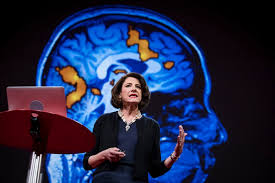
    So what’s the difference? This is your brain on real social interaction. What you’re seeing is the difference in brain activity between interacting in person and taking in static content. In orange, you see the brain areas that are associated with attention, social intelligence — that means anticipating what somebody else is thinking and feeling and planning — and emotional reward. And these areas become much more engaged when we’re interacting with a live partner.

    Now, these richer brain signatures might be why recruiters from Fortune 500 companies evaluating candidates thought that the candidates were smarter when they heard their voices compared to when they just read their pitches in a text, for example, or an email or a letter. Now, our voices and body language convey a rich signal. It shows that we’re thinking, feeling, sentient human beings who are much more than an algorithm. Now, this research by Nicholas Epley at the University of Chicago Business School is quite amazing because it tells us a simple thing. If somebody hears your voice, they think you’re smarter. I mean, that’s quite a simple thing.

    Now, to return to the beginning, why do women live longer than men? And one major reason is that women are more likely to prioritize and groom their face-to-face relationships over their lifespans. Fresh evidence shows that these in-person friendships create a biological force field against disease and decline. And it’s not just true of humans but their primate relations, our primate relations as well. Anthropologist Joan Silk’s work shows that female baboons who have a core of female friends show lower levels of stress via their cortisol levels, they live longer and they have more surviving offspring. At least three stable relationships. That was the magic number. Think about it. I hope you guys have three.

    The power of such face-to-face contact is really why there are the lowest rates of dementia among people who are socially engaged. It’s why women who have breast cancer are four times more likely to survive their disease than loners are. Why men who’ve had a stroke who meet regularly to play poker or to have coffee or to play old-timer’s hockey — I’m Canadian, after all —are better protected by that social contact than they are by medication. Why men who’ve had a stroke who meet regularly — this is something very powerful they can do. This face-to-face contact provides stunning benefits, yet now almost a quarter of the population says they have no one to talk to.

    We can do something about this. Like Sardinian villagers, it’s a biological imperative to know we belong, and not just the women among us. Building in-person interaction into our cities, into our workplaces, into our agendas bolsters the immune system, sends feel-good hormones surging through the bloodstream and brain and helps us live longer. I call this building your village, and building it and sustaining it is a matter of life and death.

    Thank you.

    Susan Pinker is the author of the book The Village Effect: How Face-to-Face Contact Can Make Us Healthier, Happier, and Smarter. Published by Penguin Random House (2015).

    (End of Article)

    With this being said, if you have a parent or loved one living at home alone without a strong social network you should consider seeking a community setting where The Village Effect could benefit.  Cambrian Senior Living has locations  in both South Lyon and Tecumseh, Michigan.  The South Lyon location serves seniors from Lyon Township, New Hudson, South Lyon, Novi, Wixom, Northville, Brighton, and surrounding areas.  The Tecumseh location serves Tecumseh, Onsted, Brooklyn, Britton, Dundee, Adrian, Blissfield, Deerfield, Milan, and surrounding areas.  For more information visit www.CambrianSeniorLiving.com

  • Myths and Stereotypes of Aging

    Myths and Stereotypes of Aging

    By Jeff Anderson

    Ageist stereotypes about seniors are pervasive in our culture. In films, on television and even in the jokes we hear, misconceptions and stereotypes about aging and seniors are ever present.

    myths-and-stereotypes-of-aging-768x403Like any form of bias, ageism has led many of us to make false assumptions about seniors.
    Learn more about some of the top myths of aging:

    Myth: Aging is Depressing
    Contrary to the myth that aging is depressing, many studies find that seniors are among the happiest age group. Happiness levels by age follow a U-shaped curve, with self reported levels of happiness at their lowest at age 40, but then growing thereafter. In addition, those who think aging is depressing also believe that it makes seniors grumpier. People who are unhappy in their younger years will likely continue to be in their later years, and similarly, good-natured people continue on a happy trajectory as they age. In other words, one’s attitude comes down to their individual personality, not an age group.
    Myth: Aging Leads to Loneliness
    Though social isolation can be a problem for seniors, especially to those who have limited mobility, lack of transportation or who have recently lost a spouse, most seniors are able to stay stay socially engaged. Activities and visits with family and friends, and at places such as the local senior center or a place of worship, also help seniors stay socially active and happy.
    Myth: Aging Dulls Wits and Inevitably Causes Dementia
    While aging can create cognitive changes, older people may perform better in certain areas of intelligence and poorer in others. For example, while seniors may have slower reaction times, “mental capabilities that depend most heavily on accumulated experience and knowledge, like settling disputes and enlarging one’s vocabulary, clearly get better over time,” writes Patricia Cohen in the New York Times. What’s more, dementia is anything but inevitable. According to the Alzheimer’s Association, only 5% of those over age 65 will develop dementia.
    Myth: Aging Makes You Unproductive
    Though retired people may have left the workforce, they are hardly unproductive. They contribute countless hours to activities like helping with child-rearing and volunteering, which makes an enormous impact on society. In fact, a report by the Bureau of Labor Statistics indicates 24% of senior citizens report engaging in volunteer work after retirement.
    Myth: Aging Makes You Less Creative
    There are countless examples that dispel the myth that aging makes you less creative. In fact, many artists actually find their calling or achieve mastery in their later years. A great example is the immortal “Grandma Moses.”
    Anna Mary Robinson Moses was an ordinary, unassuming woman who lived on a farm in upstate New York in the mid 1800’s. After her husband passed away, Mrs. Moses (as she liked to call herself) transitioned from farm work to a quieter life of embroidering for fun and making delicious preserves for her now grown children. But, when arthritis made embroidering too painful, a friend suggested she try painting. Mrs. Moses took to painting scenes of rural life, and even hung a few of her paintings in the local drugstore. Her paintings caught the eye of a prominent art collector who was passing through town and the rest is history. Her first one-woman art show was held in 1940 when Moses was already 80-years-old. She became famous and was dubbed “Grandma Moses,” a name that stuck. She continued to paint until the age 101.
    Myth: Aging Makes You Unable to Adapt to New Situations
    Older people are not only able to adapt to new situations, they are actually experts at adapting. By the time one has become a senior, they have had to adapt to innumerable changes and transitions in life, many of which could have certainly been challenging. Seniors may be slower to change their opinions, but one of humanity’s’ greatest traits, adaptability, is generally retained as we grow old.
    Myth: Aging Erases Your Libido
    Discussing the love and sex lives of seniors is largely taboo in our culture and has led to the stereotype that the elderly are sexless. This stereotype is harmful because it can cause seniors to have conflicted feelings or unnecessary guilt about their sexuality, while simultaneously causing younger people to hold misconceptions about aging and the elderly. As a state of Oregon document notes adroitly: “Research has found that sexual activity and enjoyment do not decrease with age. People with physical health, a sense of well-being and a willing partner are more likely to continue sexual relations. People who are bored with their partner, mentally or physically tired, afraid of failure or overindulge in food or drink are unlikely to engage in sexual activity. These reasons do not differ a great deal when considering whether or not a person will engage in sex at any age.”
    Myth: Aging Makes You More Religious
    Seniors certainly have a higher rate of religious attendance than younger people, but this is a generational phenomenon rather than an aging phenomenon. If you regularly attended church growing up, you’re likely to continue to do so as you age. Today’s senior’s haven’t become more religious with time. Instead they grew up in a time when more people went to church, which is why seniors are the most religious age group.